
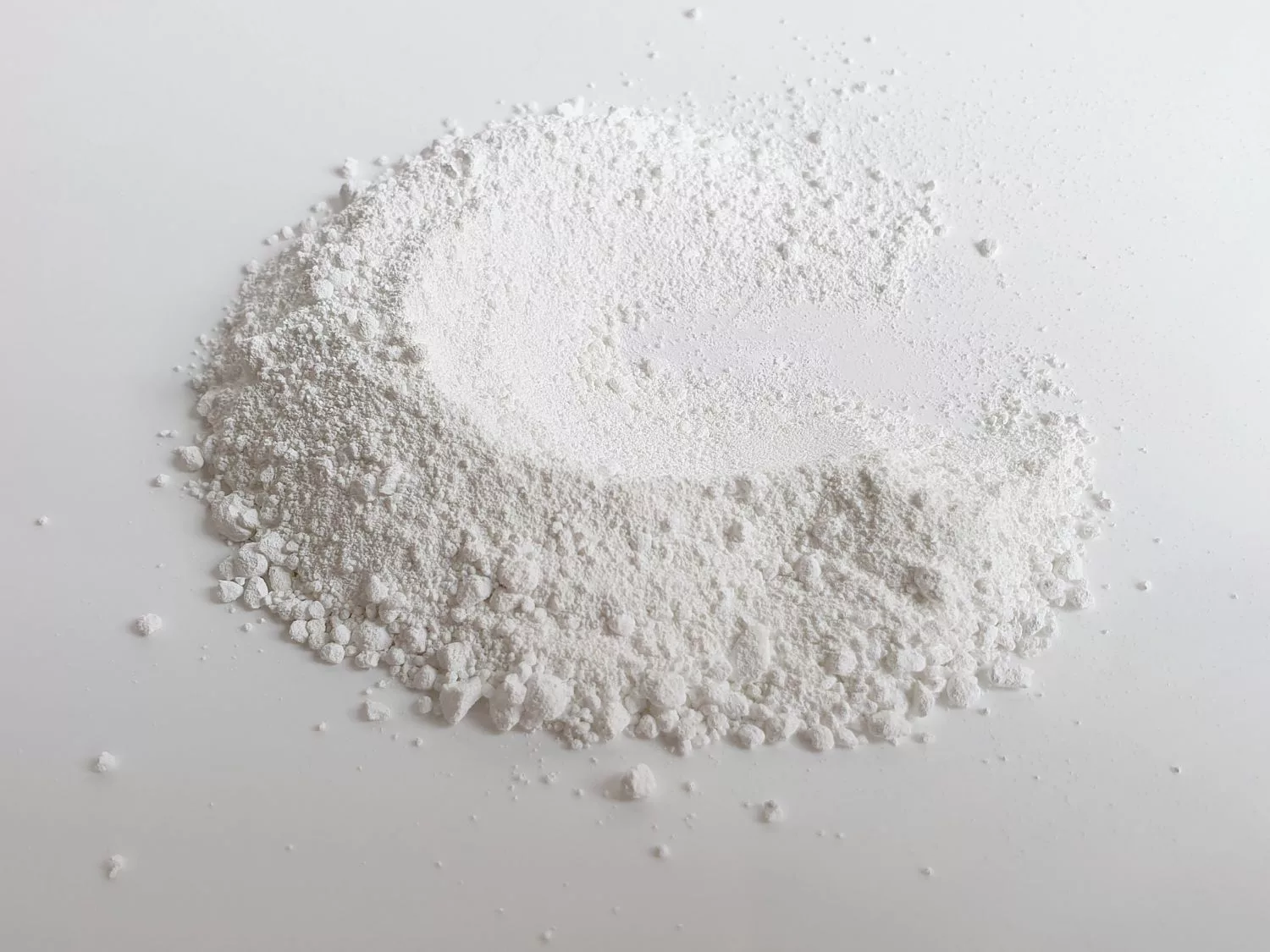
Researchers at Lawrence Berkeley National Laboratory (Berkeley Lab) have discovered that when titanium dioxide (TiO₂), a material widely used in semiconductors and even everyday products like sunscreen, is thinned down to just a few nanometers, it undergoes a remarkable transformation: it becomes ferroelectric.
Ferroelectric materials exhibit a spontaneous internal electrical alignment (polarization) that can be reversed with an external electric field. Such materials are extremely attractive for low-energy memory and logic devices because they can switch at significantly lower voltages than conventional materials.
Thickness‐dependent transition in titanium dioxide films: dielectric to ferroelectric phase for thin (>3 nm) systems. Ferroelectricity is astonishingly retained even down to 1 nanometer, consisting of approximately two unit cells, with the structural distortion breaking crystal symmetry and stabilizing a polar orthorhombic structure.
Despite being synthesized below 400°C via atomic layer deposition, both kinds of film are stable on silicon and amorphous surfaces with complete compatibility with present semiconductor technology.
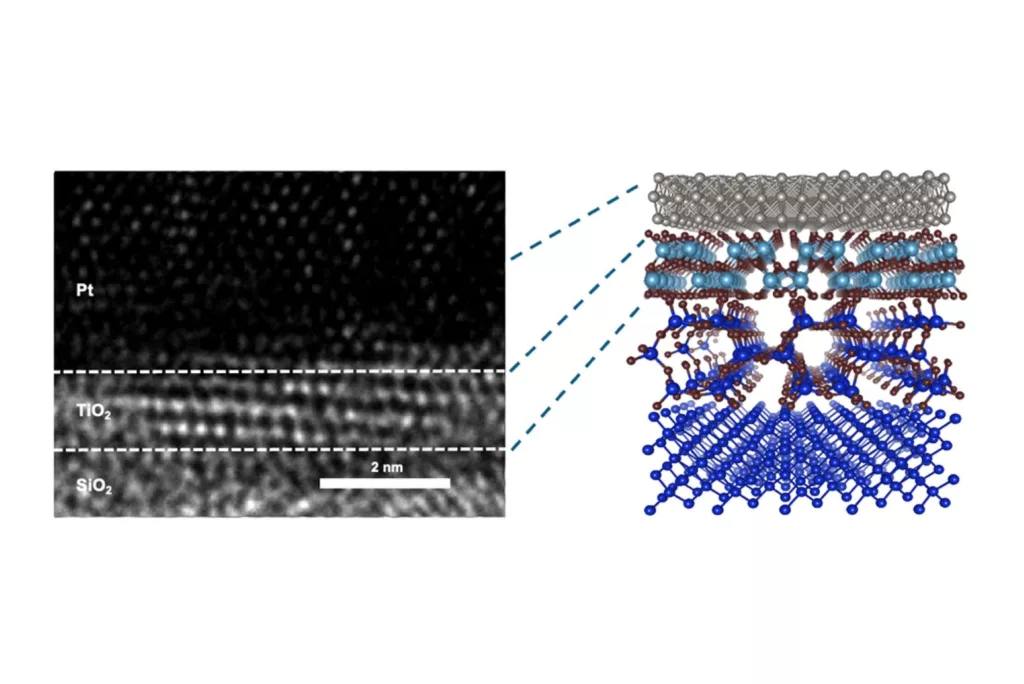
At the Advanced Light Source (ALS), X‑ray absorption measurements revealed anisotropies in the electronic structure, confirming that symmetry breaking had occurred. Complementing this, second‑harmonic generation (SHG) optical experiments showed a sudden jump in signal intensity below a thickness of 3 nanometers, providing direct evidence of ferroelectric distortion in the films.
Scientists discovered a novel form of ferroelectricity in an elementary substance
Combined, these methods provided a strong verification of the structural origin of phase transitions in atomic-scale ferroelectricity.
Ferroelectric titanium dioxide holds enormous promise for next-generation electronics. By enabling energy-efficient chips, it could significantly reduce power consumption in microelectronics, a crucial advance for AI systems and data centers.
Its compatibility with silicon and amorphous substrates renders scalable integration realistic, paving the way for manufacturing. Beyond its immediate applications, this discovery also broadens the materials library and paves the way for discovering additional compounds that are ferroelectric only when confined to reduced dimensions.
“It’s all about making devices more efficient and reducing power consumption at ever smaller scales,” said Sayeef Salahuddin, who led the study published in Science.
This work shows that even a ubiquitous dielectric like titanium dioxide can reveal extraordinary properties when pushed to atomic-scale thickness. It’s a reminder that the future of electronics may lie not in exotic new compounds, but in reimagining familiar materials at the nanoscale.
Journal Reference:
- Koushik Das, Kate Reidy, Sajid Husain, Jong Ho Park et al. Ferroelectricity in atomic-scale titanium dioxide dielectric films. Science. DOI: 10.1126/science.aec9