
Step into the Ice Age. Picture a frosty expanse and envision what this walker looks like: beefy, solid of shoulder, face smoothed by millions of years of effort. And it looked like this: the ruggedly constructed Neanderthal. Scientists have puzzled over their physical distinctiveness for decades, though; what exactly were they doing?
Neandertals were stronger than modern humans, with large muscles, heavy brow ridges, and squat tooth roots. The pituitary gland releases growth hormone, which attaches to a receptor on muscle and bone cells.
An international team led by Hugo Zeberg and Philipp Kanis found that the Neandertal version of this receptor carries two genetic changes not found in the version most common in modern humans.
At the center of growth and skeletal development lies the hypothalamic-pituitary-somatotropic (HPS) axis, a biological communication line where growth hormone (GH) plays the starring role. Scientists decided to explore whether Neanderthal-specific genetic variations in this axis contributed to their powerful build.
Ancient DNA reveals the first Neanderthal family
Their focus: the growth hormone receptor (GHR).
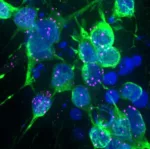
The study found that lab-grown cells with the Neandertal receptor responded much more strongly to growth hormone, growing about 40% more than cells with the common modern human receptor. Most of this stronger effect was traced to one of the two Neandertal-specific changes.
Neanderthal growth hormone receptor (GHR) carried two amino acid changes and one deletion. When researchers expressed this Neanderthal receptor in a GH-dependent cell line, something remarkable happened. The cells proliferated faster than cells expressing the modern human GHR when stimulated by pituitary GH but not by placental GH.
In other words, the Neanderthal receptor supercharged growth when triggered by pituitary GH, a key signal for skeletal and muscle development.
Deadly human diseases may have caused the Neanderthal extinction
Modern humans inherited this receptor through interbreeding with Neandertals about 47,000 years ago, and today it is especially common in South and East Asia; up to 24% of people in some South Asian groups carry it, compared with only about 0.5% of Europeans.
“What struck me most was that two very different types of evidence told the same story,” says Philipp Kanis. “Cells in the lab responded more strongly, and data from over a million people showed the same effect in the body.”
The Neandertal receptor’s effects seem to appear only after childhood. In more than 6,000 children, researchers found no link to growth before age eleven, suggesting the impact shows up later, likely around puberty when growth hormone surges.
Among adults, carriers had about 270 grams more muscle mass on average. The receptor was also tied to subtle skeletal traits, like a shorter rear lower jaw and shorter tooth roots, features closer to Neandertals.
The spines of Neandertals may explain our back-related ailments
“It is fascinating that one genetic change inherited from Neandertals can still affect the human body today,” says Hugo Zeberg. “But it’s only one of many influences on growth and body shape, and it doesn’t determine overall appearance.”
This discovery isn’t just about the past; it’s about the present. This explains how adaptations made centuries ago still affect body characteristics like muscle mass and facial structure.
Journal Reference:
- Philipp Kanis, Miriam Berreiter, Daniel Sieme, Svante Pääbo et al. Increased signaling of the Neanderthal growth hormone receptor. Current Biology. DOI: 10.1016/j.cub.2026.07.025