
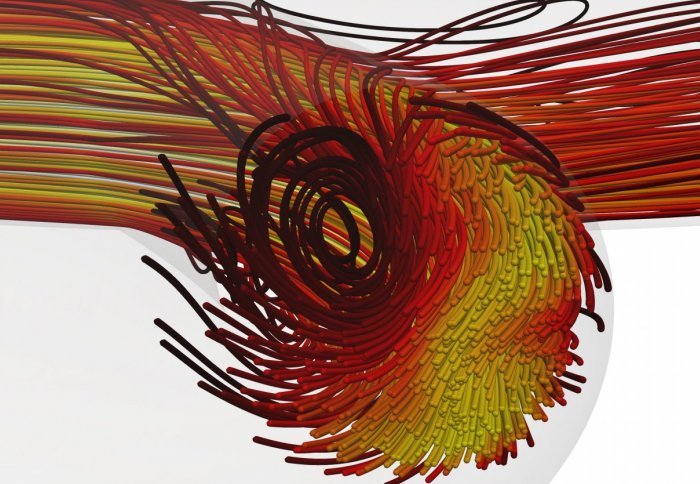
Scientists used artificial intelligence and trained aerospace simulation software to develop a device that they hope to bring new dialysis to patients. By using a machine learning algorithm that simulates unsteady air pocket flow over a plane, scientists were successfully able to optimize blood flow in the veins of patients experiencing dialysis.
When kidneys fail, dialysis keeps your body in balance by removing waste, salt, and extra water to prevent them from building up in the body. It does this by diverting them into a machine.
Connecting the machine to the patient requires a special junction between an artery and a vein in the patient’s wrist or upper arm. That special junction is also known as an arterio-venous fistula (AVF).
Because of unusual and exceptionally unstable blood flow, almost 50% of AVFs block up and fail due to inflammation of the artery wall. Thus, patients need to undergo another procedure and in some cases repeated procedures.
This newly developed device shows how blood flow could be optimized to potentially improve AVF procedures. Using AI optimized the shape of an AVF, and thus reduces the unsteadiness in the blood flow.
Dr. Peter Vincent, co-author of the study, said, “We routinely use computer simulations to study airflow over airplanes. These same techniques can now be used to optimize medical devices, including AVF.”
Dr. Richard Corbett, co-author from Hammersmith Hospital, said, “Haemodialysis is a life-sustaining treatment used by millions of patients worldwide who have kidney failure. These patients are dependent on arterio-venous fistula (AVF) procedures to clean their blood. However, dysfunction and failure in the AVF is a real problem for these patients, leading to many hospital admissions and extra operations.”
“This technology offers great promise for these patients. By improving outcomes from AVF surgery, it could potentially reduce the need for repeated operations, which could and lead to better quality dialysis.”
The prototype device has so far undergone preliminary tests in pigs, which have been successful. Scientists now are planning to continue tests on pigs for several months to test its effectiveness. Even if these trials are a success they will be several years away from carrying out clinical trials with patients.