
Electroplating, a standout amongst the most critical procedures in science in which plating of one metal onto another is done by using hydrolysis. Due to this, the electrical contacts in integrated circuits happens with nanometric precision.
However, various scientists since decades trying to hypothesize the early stages of electrodeposition, the formation of the single nucleus, but it remains a formidable challenge.
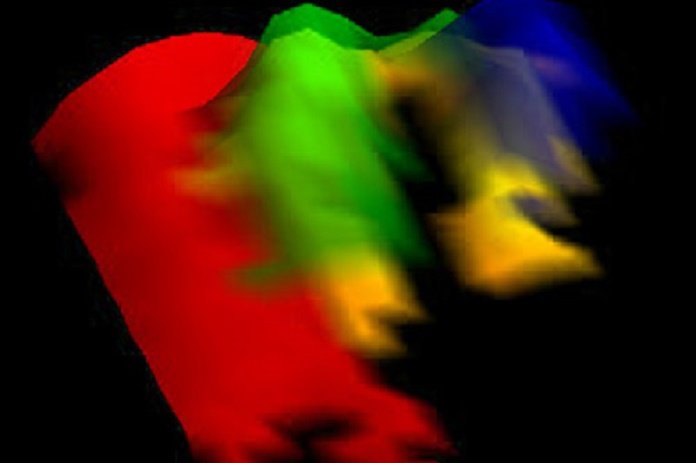
Now, a collaboration of scientists from the University of Bristol’s Schools of Chemistry, Physics and the Bristol Centre for Functional Nanomaterials CDT, for the 1st time have captured the birth of a single nucleus. They have developed an entirely new approach that monitors the process leading to the birth of a nucleus in real time.
David Fermin, Professor of Electrochemistry said, “This is a very exciting development which pushes the boundaries of spatiotemporal resolution of electrochemical processes.”
“There are highly sophisticated methods which allow monitoring phenomena at the atomic scale, but compromising the dynamics of the process, while other methods can follow very fast dynamics but we can’t ‘see’ where they happen in space.”
Here, scientists made use of Lateral Molecular Force Microscopy and observed the formation of a metallic nucleus. For this, they even pursued the perturbations of visco-elastic properties of hydration layers with nanometer resolution.
This microscope works by detecting small changes in the oscillation of a very sharp tip as a result of the sheer force introduced by water layers.
According to Professor Fermin, this is just an example of the new science. “Our unique microscope can unveil in fields such as interfacial electrochemistry and catalysis for energy,” he said. “The most fascinating is, we can detect very subtle changes in the structure of water in real-time.”
The study shows that the detection of very small local perturbation of the water structure near the surface, the complex dynamics of early stages of electrodeposition can be tracked.