
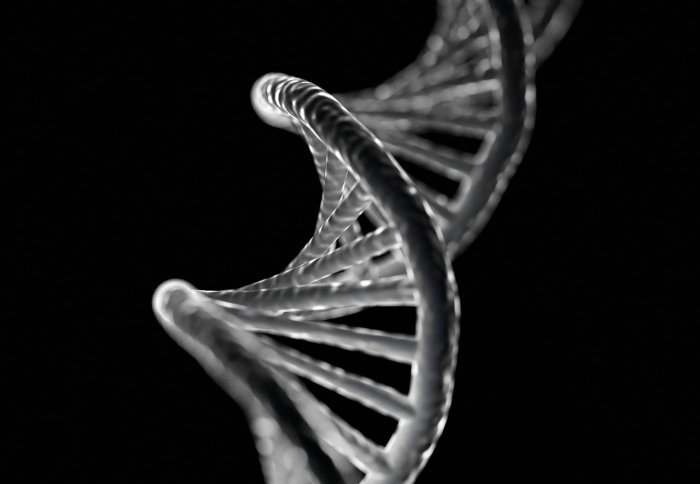
An Internation team including UCL scientists, by using cryo-electron microscopy, have revealed the structure of a key enzyme involved in the earliest steps of the DNA replication process.
DNA replication makes all living cells to divide for growth. Any mistake during this orchestrated process leads to devastating disease. By concentrate the structure of the compounds behind the procedure and which deliberately disentangle and duplicate DNA, researchers want to reveal new insight into the procedure.
According to scientists, it could lead to new insights into the basis of cancer and genetic disease.
Professor Christian Speck said, “We have managed to reveal another very important piece of the puzzle of how cells make new copies of their DNA. Helicases are crucial to this fundamental process, and techniques like cryo-EM are enabling us to capture a much clearer image of what they look like and how they work.”
Before replication two enzymes likely to form a single unit on the DNA double helix. When they split to form two functional enzymes, they pull the two strands of the double helix apart, like a gap appearing between the threads in the middle of a piece of rope.
As the process takes place, the enzymes then move along the DNA in opposite directions, ‘unzipping’ the double helix as they go, with the new strands filling in behind them, a mirror image of the exposed strands. The result is two new DNA helixes, comprising of one half of the original strands and a newly made strand.
By using their method, scientists were able to detect these helicase enzymes named Mcm2-7. They mapped its 3D structure by illuminating how the enzymes latch on to 60 base pairs or letters of the DNA.
By rendering the structures, scientists thought they now understand how these enzymes kick off the whole process. As the helicases form around the DNA double helix they cause it to kink into a zigzag shape which puts pressure on it.
According to the researchers, the effect is like a spring-loaded mechanism when the enzymes separate, pulling the DNA apart.
Huilin Li, a professor at the Van Andel Research Institute said, “These are processes at the very foundation of life that have largely remained a mystery to biologists since the discovery of DNA double helix more than 60 years ago.”
“Thanks to this Nobel prize-winning cryo-EM technology, we can now directly visualize the operational mechanism of action, for the benefit of research and to improve health for people around the world.”